

Considering signing up for a paid clinical trial? You’re not alone. Thousands of people in the UK participate in these research studies every year to help advance science — and get paid in the process.
This updated guide breaks down how paid clinical trials work in 2025, what types are available, how much you can realistically earn, and where to find the best opportunities.
What Are Paid Clinical Trials?
Paid clinical trials are studies that test new drugs, treatments, or medical devices on human volunteers. In exchange for your time and participation, you often receive financial compensation. These trials are essential to medical research and are strictly regulated to ensure participant safety.
Common types of paid studies:
- Drug trials: Testing new medications for safety and dosage.
- Vaccine trials: Monitoring immune response to new or improved vaccines.
- Medical device trials: Evaluating new health tech like wearables.
- Behavioral studies: Low-risk studies involving surveys or therapy.
- Cosmetic testing: Reviewing skincare or non-invasive treatments.
How Much Do Clinical Trials Pay in 2025?
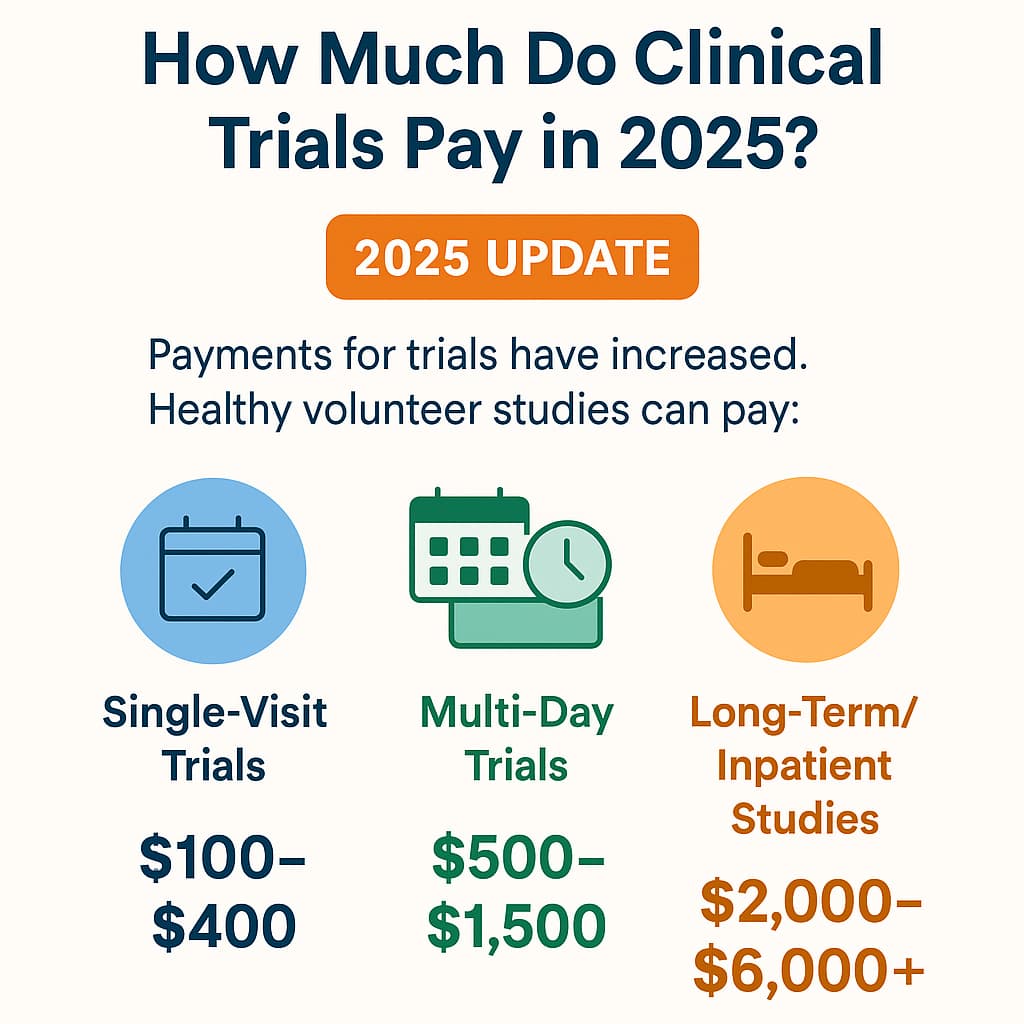
Compensation has slightly increased in 2025 as demand for healthy volunteers grows. Here’s a general breakdown:
| Trial Type | Duration | Estimated Payment |
|---|---|---|
| Short-term (1 day or less) | 1–8 hours | £100–£400 |
| Medium (2–7 days) | Multiple visits | £500–£1,500 |
| Long-term (weeks/months) | Overnight stays | £2,000–£6,000+ |
Factors that affect pay:
- Time commitment (especially overnight stays)
- Invasiveness of procedures (blood tests, biopsies)
- Risk level
- Location and sponsor budget
Real Example (2025): A 5-day residential drug trial in London currently offers £1,800 for healthy males aged 18–45.
Are Clinical Trials Safe?
Yes, when run by certified researchers and institutions, clinical trials follow strict ethical and safety protocols:
- All studies must be approved by a regulatory ethics committee.
- You will sign an informed consent form before participating.
- You can drop out at any time, for any reason.
- Medical teams monitor your health throughout the study.
No trial is 100% risk-free, but UK regulations provide a high level of oversight.
Can You Make a Living From Clinical Trials?
Not reliably. While some trials pay well, there are limits to how often you can participate:
- You may need to wait 3+ months between trials.
- Frequent participation can pose health risks.
- Many trials have strict inclusion criteria.
Think of paid trials as side income, not a sustainable job.
Where to Find Paid Clinical Trials in the UK
Ready to sign up? Here are trusted platforms to find current paid trials near you:
- CheckMyTrial: Curated UK clinical trial listings.
- NIHR – Be Part of Research: Official NHS database.
- Call for Participants: Academic and private studies.
- ClinicalTrials.gov: Global registry.
Also check with local:
- University medical research departments
- NHS hospital trust websites

What to Expect During a Trial
Depending on the study, you may:
- Spend hours or days at a research facility
- Give blood or other samples
- Undergo basic physical and mental exams
- Complete questionnaires
Make sure to:
- Ask about payment schedules (daily, lump sum, etc.)
- Clarify travel reimbursements and perks (meals, accommodations)

Risks vs. Benefits
Benefits:
- Financial compensation
- Contributing to important research
- Access to new treatments
Risks:
- Potential side effects
- Time demands
- Discomfort from procedures
Final Thoughts: Should You Join a Paid Trial?
If you’re healthy, flexible, and looking to earn extra money while helping move medicine forward, paid clinical trials can be a solid option. Just make sure to do your homework, read the fine print, and prioritize your safety.
Pro Tip: Use more than one trial-finder site and sign up for alerts. The best-paying studies fill fast.
Want help applying for a clinical trial or need tips on boosting your eligibility? Drop your questions below or visit our [Find a Trial] page to get started.
 Paid Clinical Trials UK
Leave a comment